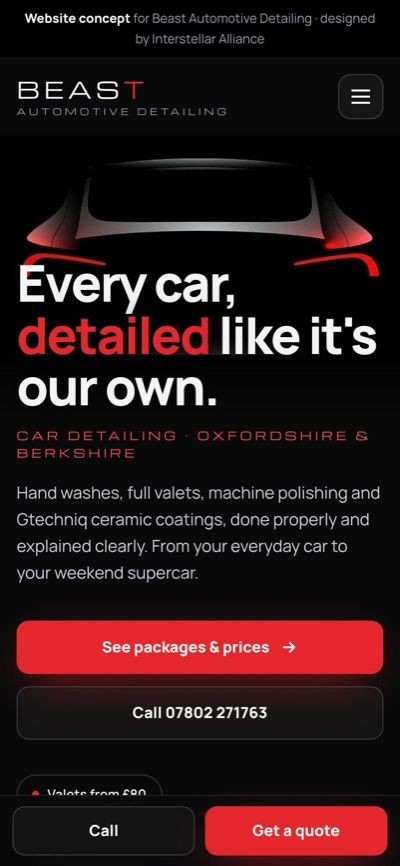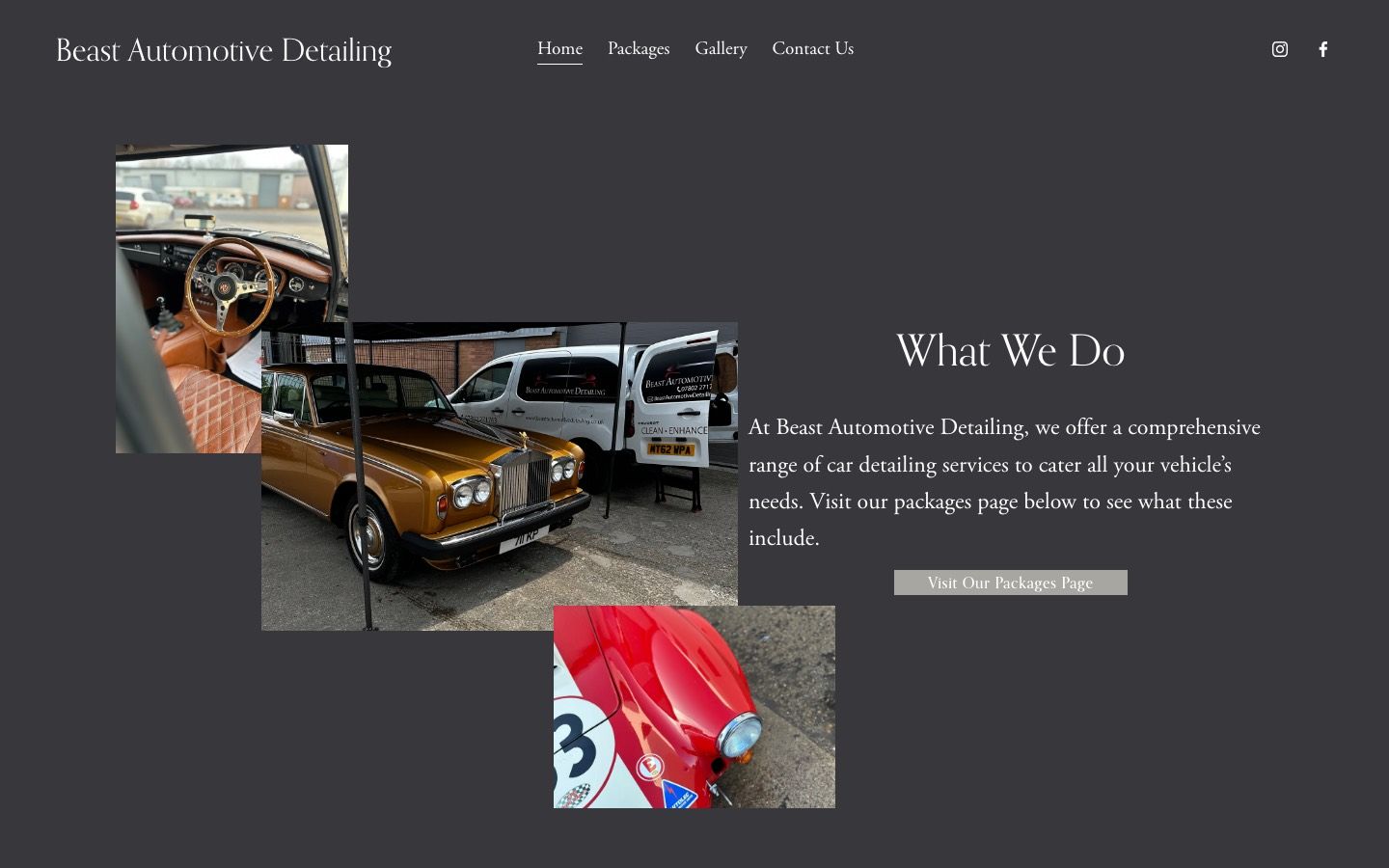
A template can be the right call for a brand-new business testing an idea, but a business that lives on local search and enquiries usually gets more work from a site built around how its customers actually find and contact it. A custom build is not a guaranteed source of more enquiries, though: the right choice depends on your budget, what your customers need to do, and how well the site is looked after.
What does a template actually give you?
A DIY website builder gives you a way to get online without commissioning a bespoke design. You choose a theme, add your words and photos, then edit the pages yourself. For a new business with a simple offer and limited budget, that can be a sensible start.
The main advantages are speed, a lower starting commitment and direct control over everyday changes. If you enjoy working on your own website, or you only need a basic page with your contact details, a template may be enough for now.
The trade-off is that you are working within the builder’s layouts and features. You may be able to change colours, images and sections, but it can be harder to shape the whole experience around your brand or a particular customer journey. That does not make template sites bad. It means you should check that the available options fit what your business needs.
What does a custom build give you?
A custom website is designed around your business, your customers and the actions you want visitors to take. That might mean making it easy to call, request a quote, book a service or pay online. It gives you more control over how those steps work and how the site looks on a phone.
A bespoke website is not automatically better just because it is bespoke. The design still needs useful information, clear next steps and a reason for a visitor to trust you. But a carefully planned custom build can put those things in the right order rather than asking you to adapt your business to a pre-set theme.
At Interstellar Alliance, our websites are designed from scratch, with no off-the-shelf themes. They are mobile-first, with SEO set up from day one, and booking and payments can be built in where needed. Business sites also come with their own admin for visitor stats, enquiries with customers’ photos, gallery uploads and social links.
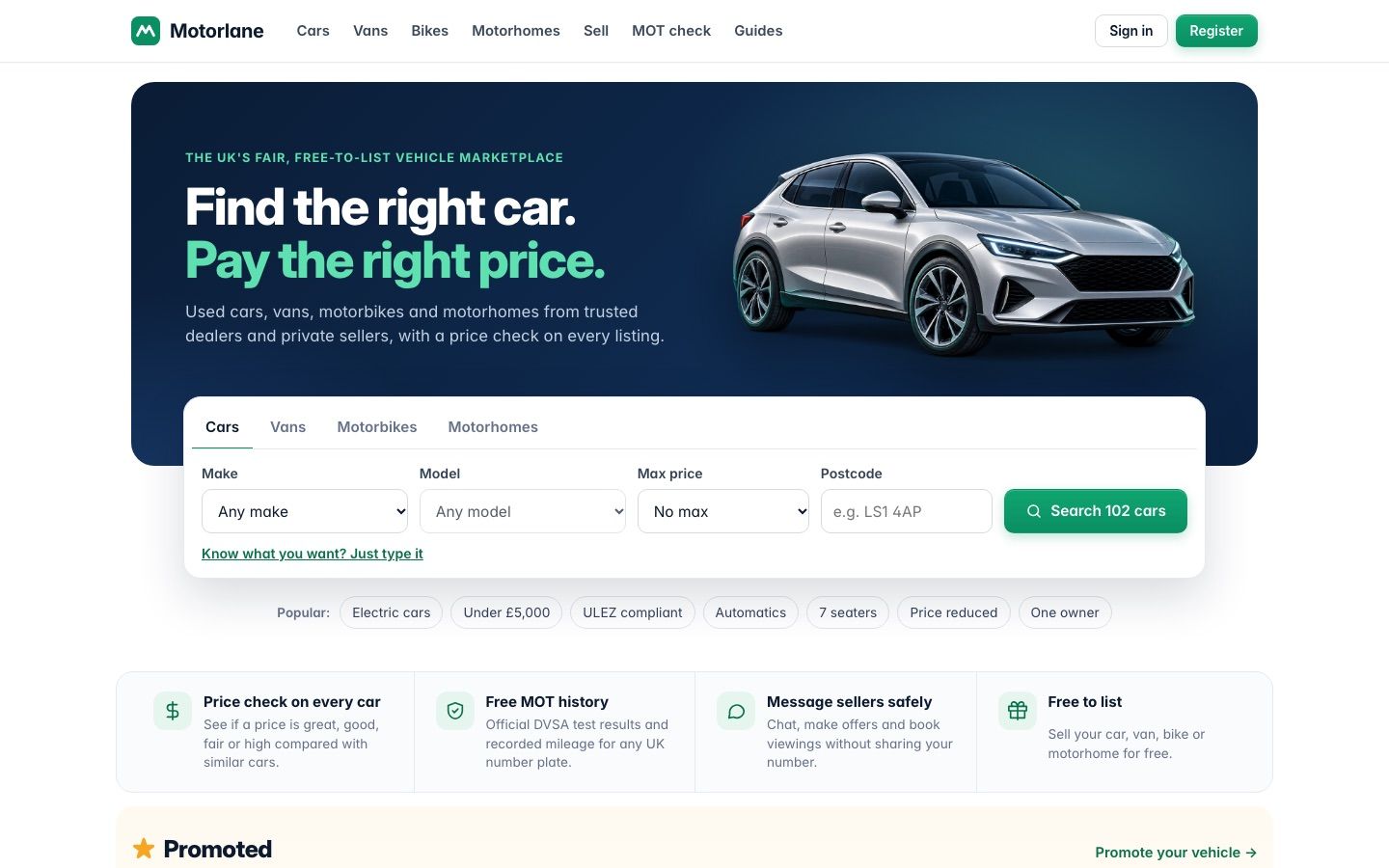
We build and run our own online businesses, including Motorlane, Motorlane Fleet and Interstellar Mobile Mechanic, so we know the day-to-day jobs a business website has to do.
A web designer can also take on the setup and build work, which may suit you if you would rather spend your time running the business. Before choosing, ask what happens after launch: who looks after the site, how updates work and what help costs.
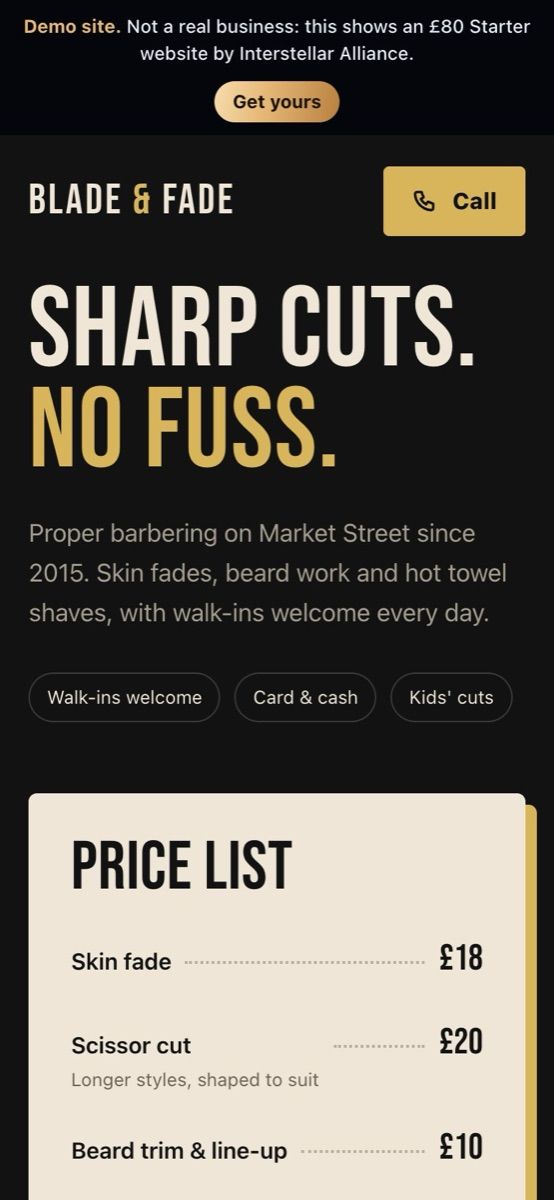
Our Starter demos show examples for a barber, café, electrician, dog groomer and cleaner.
What does each cost over five years?
A typical DIY or template builder fee of £10–£30 a month comes to £600–£1,800 over five years, based on that monthly fee recurring for 60 months. That is a useful starting comparison, not a like-for-like quote: features and what is included vary between services.
Our prices below are starting prices. The pay-once figures include the listed build price and hosting for 60 months; the monthly figures multiply today’s listed price by 60. Monthly plan prices are fixed for the first 12 months, then can rise only in line with CPI, at most once a year, so their actual five-year total may be higher.
| Option | Starting price | Five-year calculation at listed rates |
|---|---|---|
| Template builder | £10–£30/month | £600–£1,800 in recurring fees |
| Custom Starter, pay once | £80 build + £5/month hosting | £380 |
| Custom Business, pay once | £450 build + hosting from £15/month | £1,350 from |
| Starter monthly plan | £15/month | £900 at today’s rate |
| Business monthly plan | £39/month | £2,340 at today’s rate |
The Starter option is a one-page site. Business includes multiple pages, enquiry forms and an admin area. A custom build with bookings, payments or other specific features is quoted to suit what you need. The monthly plans have a 12-month minimum, then continue month to month with 30 days’ notice. Paying once works out cheaper over time. No VAT is added, as we are not VAT registered. Changes after launch are £25 an hour or a fixed price agreed in advance.
See full website prices and plan details before comparing quotes. Check what each option includes, not just the headline fee.
Which suits which business?
A template may suit you if:
- You are testing a new business idea or need a simple online presence.
- Your budget is tight and you are happy to build and edit the site yourself.
- You do not yet know which pages or features your customers will need.
A custom build may suit you if:
- Your website is an important source of enquiries or bookings.
- Customers need to see different services, prices, examples of work or answers to common questions before contacting you.
- You need features such as booking, payments or forms that let customers attach photos.
- You want a design shaped around your business rather than a theme you need to work around.
If you are unsure, start with the job you need the website to do. Count the steps between a visitor landing on the site and getting in touch. If the current site makes those steps awkward, find out whether the problem is the design, the content, the mobile experience or something else before paying for a rebuild.
How can you compare fairly?
Look at both options on a real phone, then ask:
- Does the page load and read clearly on a phone?
- Can customers find a phone number, and does the tap-to-call button stay on screen?
- Can an enquiry form accept photos if customers need to show you the job?
- Who fixes the site if something stops working, and what will that cost?
- What happens to your page addresses and SEO if you switch providers or rebuild?
- Can customers find the service, price or booking action they came looking for?
- Are hosting, updates, support and changes included, or charged separately?
SEO is not decided simply by whether a site uses a template or custom code. Google’s mobile-first indexing guidance explains why the mobile version and its content matter. A well-built template can be set up properly; a custom site still needs useful pages and clear information.
If you already have a website, our free website check scores phones, speed, security, Google basics, tap-to-call and share previews. It can help you spot issues before deciding whether a rebuild is needed.
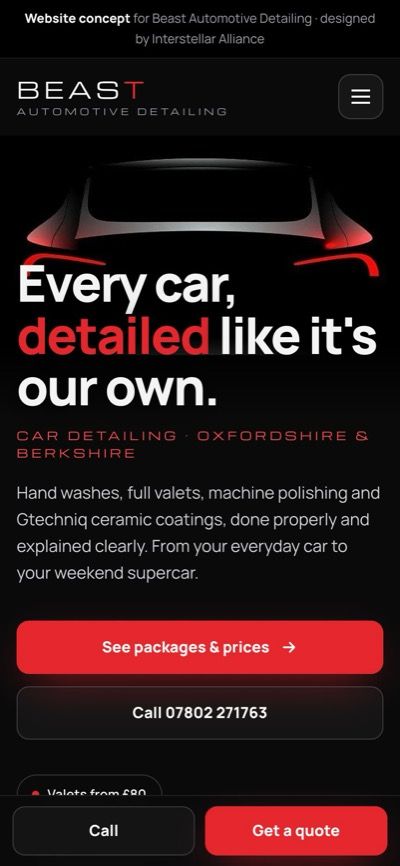
Example of a custom website layout on a phone. See more in our website work and demos.
Is a custom website worth it?
It can be, if the design or features solve a real problem for your customers or your business. If a simple template already does the job and you are getting the enquiries you need, there may be no reason to replace it.
Are template websites bad for SEO?
No. A template does not automatically prevent good SEO. Clear, useful content and a site that works well on phones matter; so does setting up the pages properly.
How much is a custom website in the UK?
Prices vary with the number of pages and features. Our custom-designed Starter websites start from £80 plus £5 a month for hosting. Business websites start from £450 plus hosting from £15 a month. Booking, payments and other custom features are quoted to your requirements.
Can I switch from a template to a custom site?
Yes. Before moving, check which words, photos, domain details and page addresses you need to keep. Ask how the new site will handle your existing pages and what happens to your SEO during the change.
What’s the cheapest proper website?
Our pay-once Starter site starts from £80, plus £5 a month for hosting. It is a one-page custom design with tap-to-call, contact details and basic SEO. See the Starter details and pricing to check whether it fits your needs.
If you want to see what a custom design could look like for your own business, request a free homepage preview. We design the homepage before you pay anything. If you would rather check your current site first, use the free website check.
Planning a new website?
Ask for a free homepage preview and see your design before you pay anything. Already have a website? Run a free check to see how it scores for phones, speed, security, Google basics, tap-to-call and share previews.